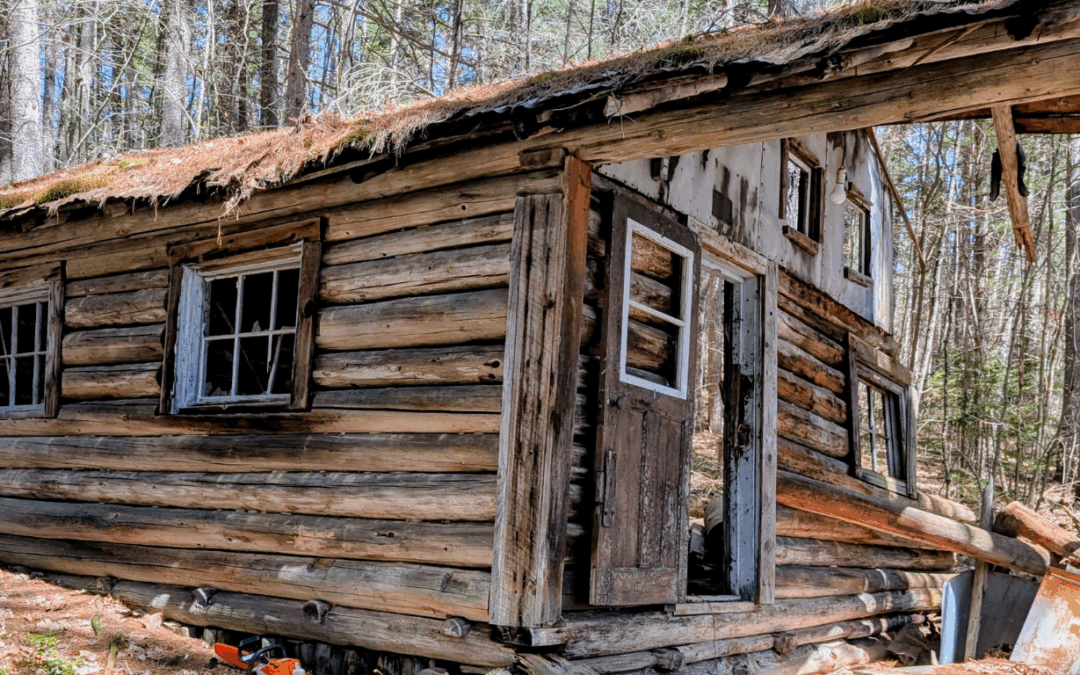
“The south and east walls of the cabin on the site have collapsed. The site also features the start of the historic supply road that the Friends of the Dumoine have devoted themselves to restoring and maintaining.” – The Equity
At the confluence of the Dumoine and Ottawa Rivers stands a site layered with more than a century of frontier life. The cabin that remains there today, weathered but still standing, is the last tangible link to the generations of loggers, river drivers, settlers, and rangers who worked and lived at the mouth of the Dumoine. Its restoration is an act of preservation for one of the Ottawa Valley’s most storied sites.
In November 2024, Friends of Dumoine rescued the abandoned 1920 Ranger’s Cabin, the first built by the Ottawa River Fire Protective Association Ltd (ORFPAL).
To secure its lease and begin restoration, we took out a $50,000 loan, a time-sensitive decision that saved the cabin from decay. All donations are greatly appreciated.
If you are interested in being featured as one of our sponsors and honored on a Builders’ Plaque, Become a silver birch memeber of the Friends of Dumoine by helping us move the “BRAG LOAD” Click Here
The following presents a brief history surrounding the creation and use of the Dumoine Cabin during the post colonial period, along with the progress Friends of Dumoine have made in its restoration. If you would like to contribute by donation or volunteering, please click here.
The Dumoine River flows through the traditional, ancestral and unceded territory of the Algonquin (Anishinabeg) peoples, It has long been under the stewardship of the families who belong to the Wolf Lake First Nation.
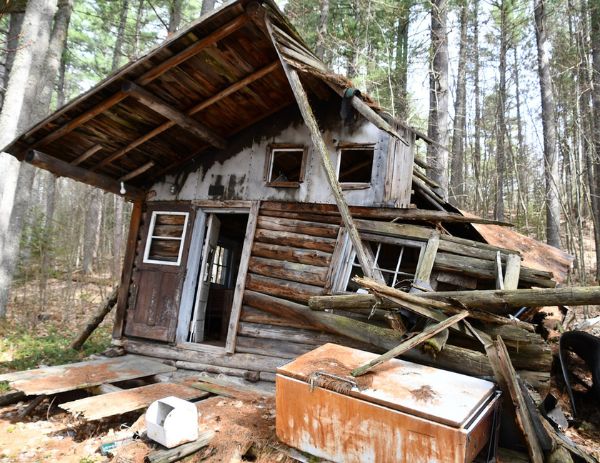
Mouth of Dumoine Cabin Spring 2025 before reno.
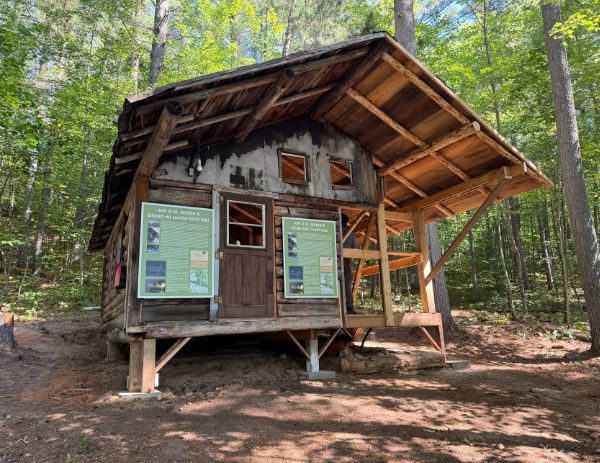
View of mouth of Dumoine cabin Sept 1 2025.
From Timber Roads to Stopping Place
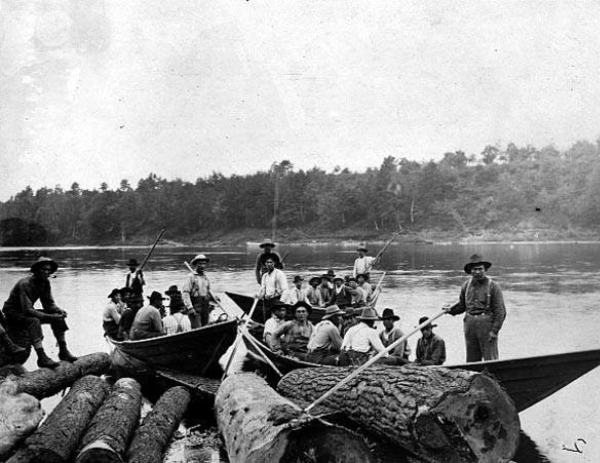
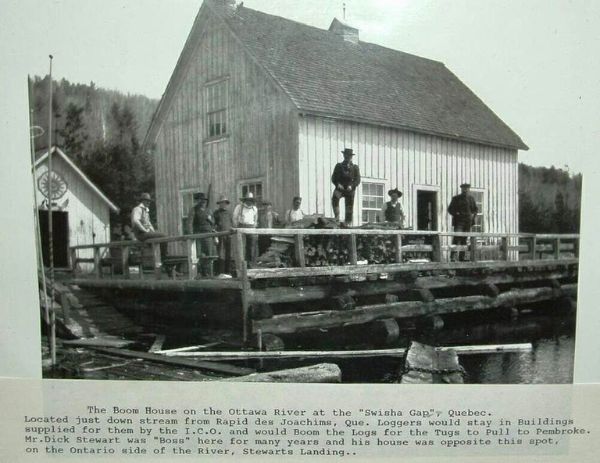
The story begins in the mid-1800s when the mouth of the Dumoine became a key access point for the booming timber trade. Lumbermen like Roderick Ryan and John Egan cut the first roads into the forest and built a crude network of tote roads, slides, and booms to move timber down to the Ottawa River. By the 1850s, the site was bustling: river drives converged here, and the Dumoine Boom and Slide Company built a boom house and road linking the mouth to Grande Chute.
In the decades that followed, a small community grew around these operations. The Sweezy family first established a farm and stopping place at the river’s mouth, part inn, part supply depot, serving the steady flow of loggers, traders, and teamsters moving between the interior and the Ottawa. By the 1870s, the Dufoe family took over the property and turned it into a vital hub for both the timber industry and travelers. Their stopping place included lodging, stables, and workshops; it became known to everyone working the Dumoine as a place of rest, trade, and news.
The Dufoe Era and Life on the River
For the next half-century, the Dufoes kept the mouth of the Dumoine alive. In an era when most transport was by river or ice road, their stopping place served as the gateway to the Dumoine watershed. Logs were sorted and boomed there, mail arrived by steamer, and weary men heading to the camps stopped in for meals, repairs, and conversation.
By the turn of the 20th century, the Dufoe operation was thriving. With the arrival of the railway on the Ontario side, new kinds of visitors began to appear, hunters and anglers from Montreal and New England, seeking the wilderness that the loggers had opened. The Dufoes welcomed these early sportsmen, offering a night’s rest before their guides took them up the tote road to remote lakes and camps.
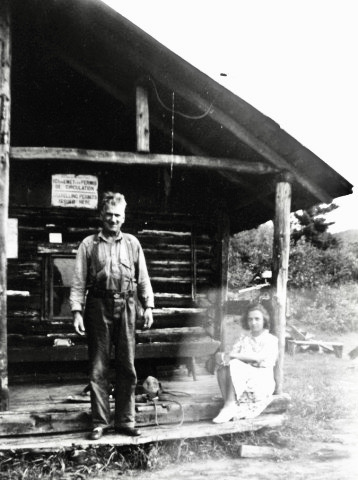
Our mouth of Dumoine cabin 1930 as a ranger cabin.
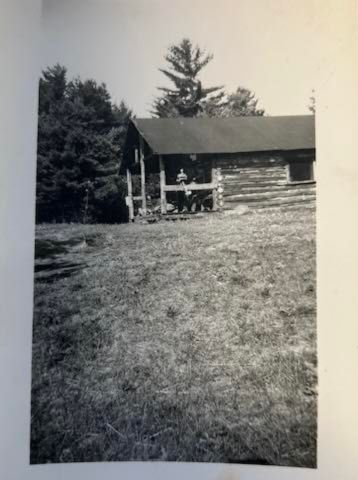
1920s photo of the rangers cabin.
The Ranger Cabin Years
Around 1918, as the timber industry continued to dominate the region, a new chapter began. The Ottawa River Forest Protective Association Limited (ORFPAL) built a small ranger cabin on the high ground just above the Dufoe farm. The cabin served as a fire protection outpost part of a network of towers, ranger stations, and telephone lines that stretched across the Dumoine watershed. Rangers based here maintained the tote roads and responded to forest fires, linking the site’s frontier past with early forest management efforts.
When Ontario Hydro built the Rapides des Joachims Dam in 1950, the landscape changed forever. The rising water of the new headpond flooded much of the original Dufoe property. Homes, barns, and booms disappeared beneath the surface but the ORFPAL cabin, built just above the new high-water mark, survived. It is this cabin, the last standing structure at the mouth of the Dumoine, that remains today.
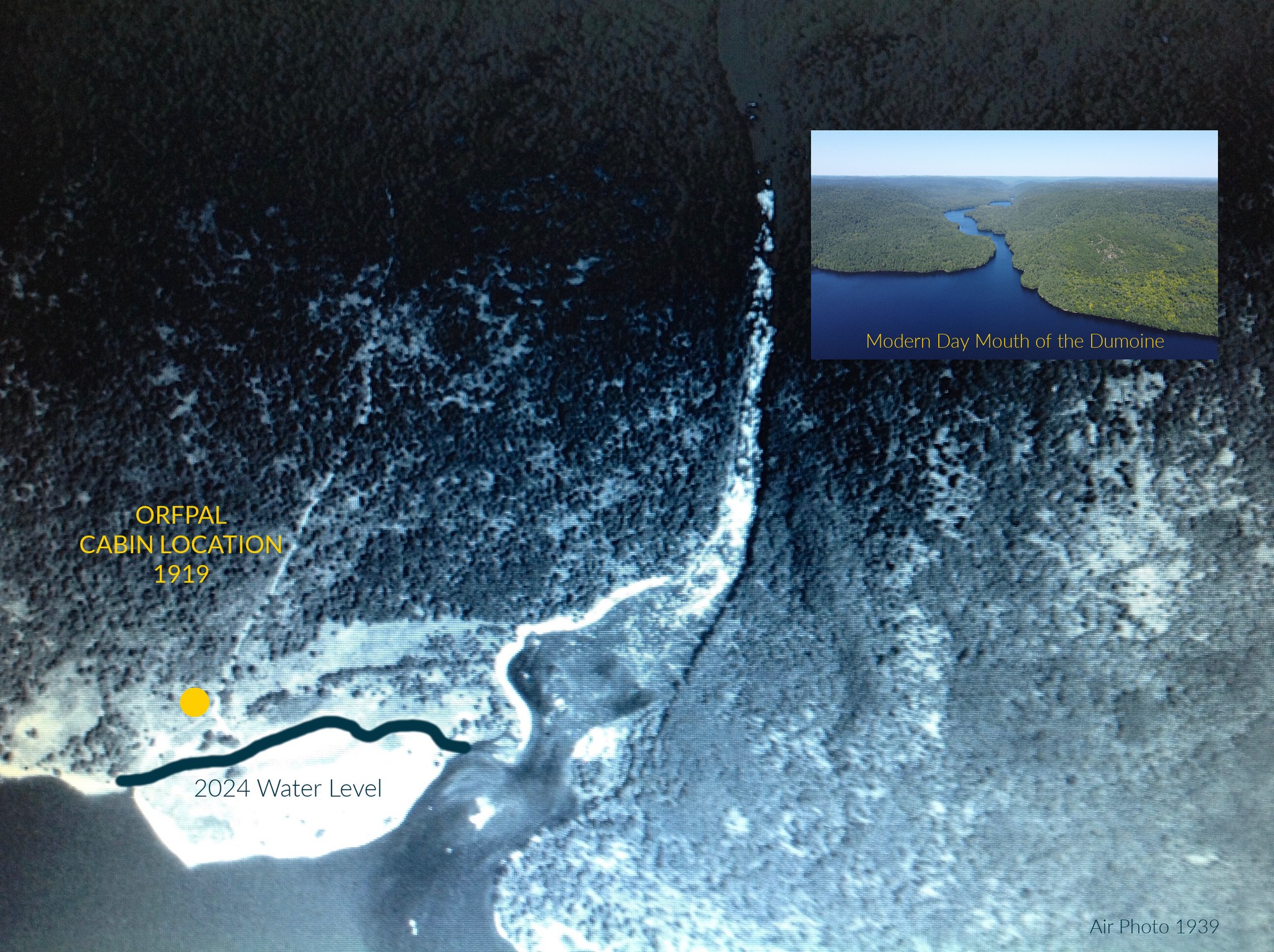
A Survivor Worth Saving
The Dumoine Cabin stands as the sole surviving building connected to the rivers early colonial human history, from the heyday of the timber trade through the era of forest rangers. Its logs have witnessed the full arc of the region’s story, the transition to conservation, and the reshaping of the land by hydro development.
The Friends of Dumoine are restoring the historic cabin so that future generations can experience the site through more than the story, as a place you can touch, walk through, and feel connected to.
If you’d like to support this work, you can donate or volunteer your time by clicking bellow.
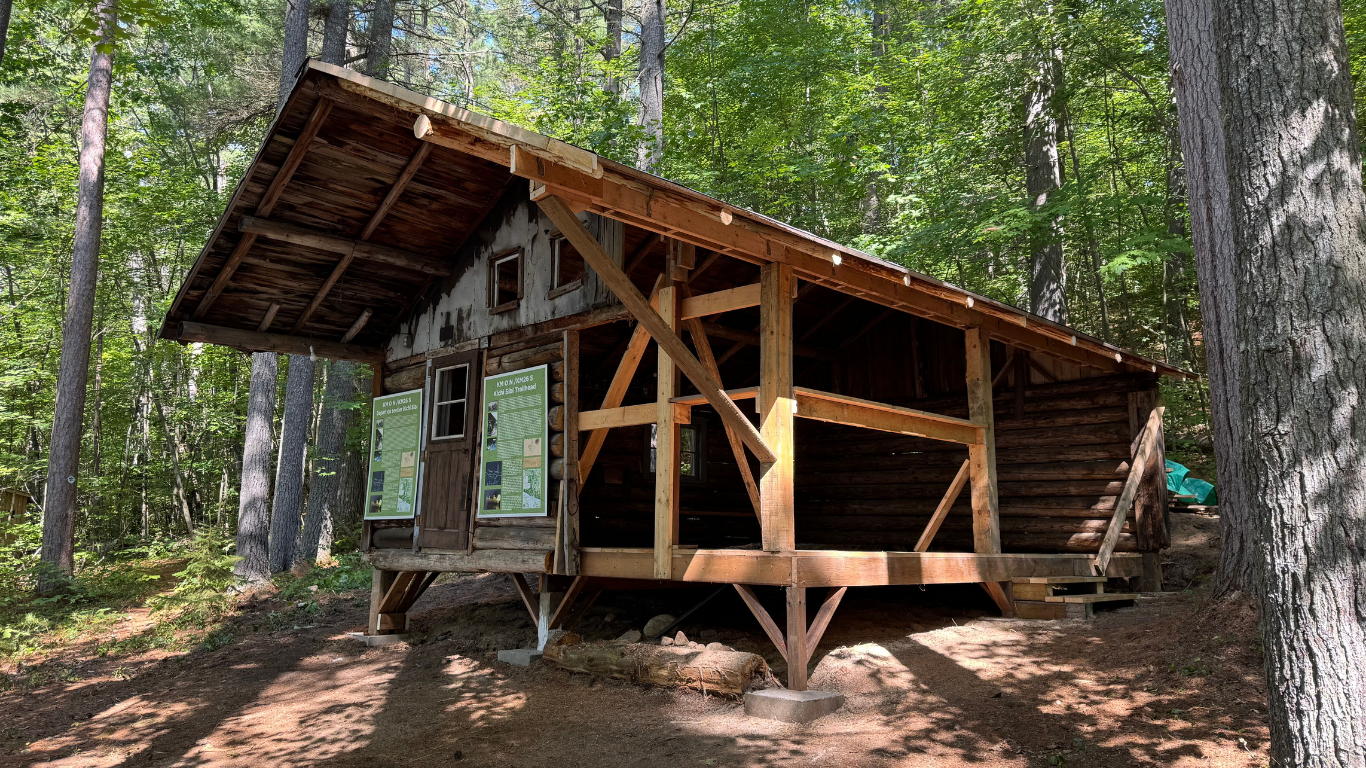
Mouth of Dumoine shelter complete phase one.
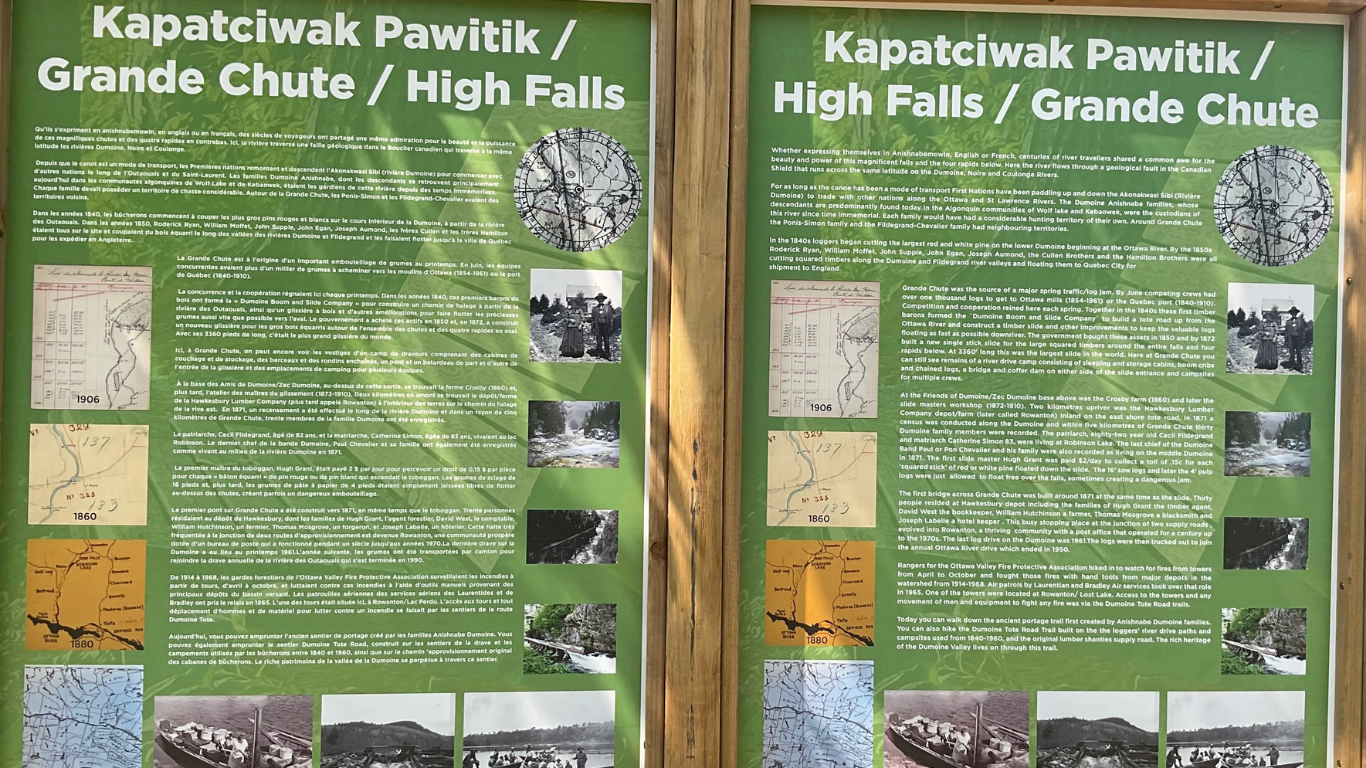
Historic site sign at new upriver viewpoint Grande Chute.
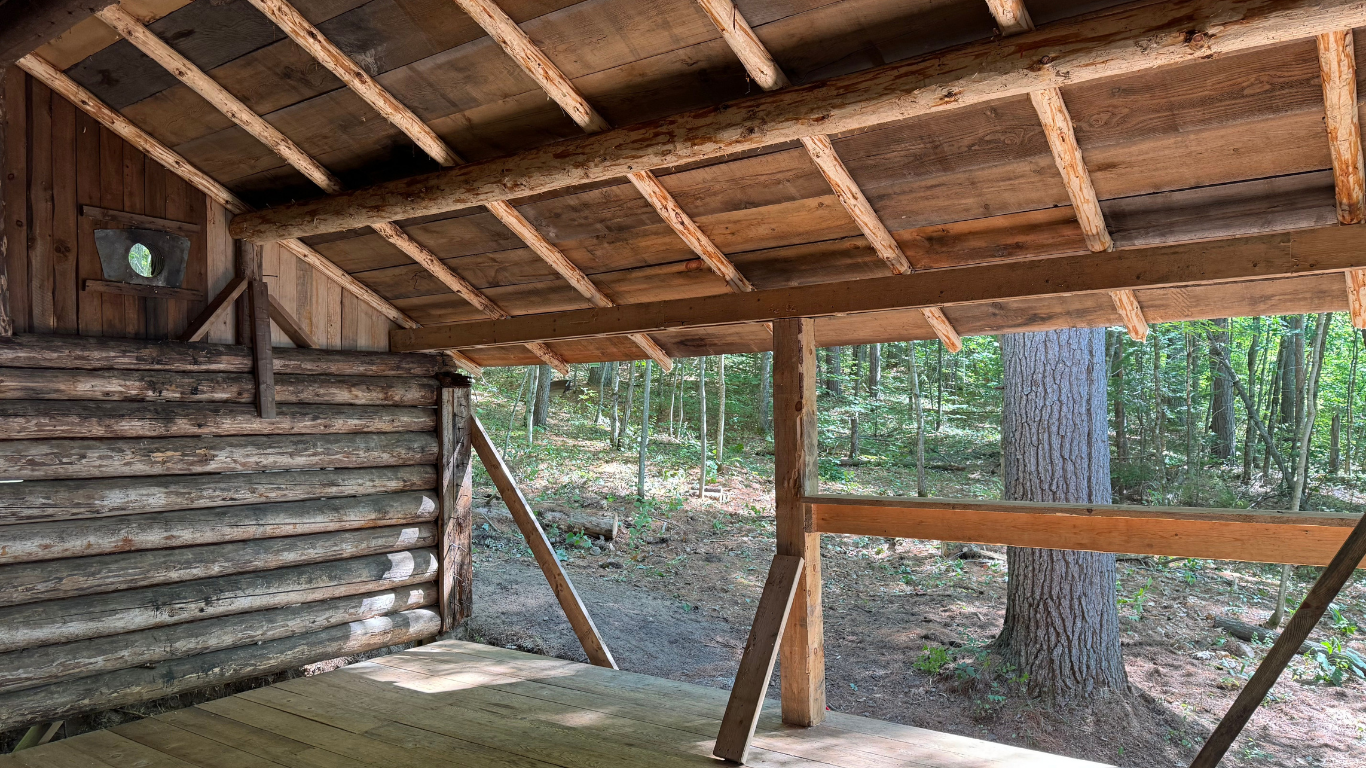
Interior mouth of Dumoine shelter Sept 1 2025.
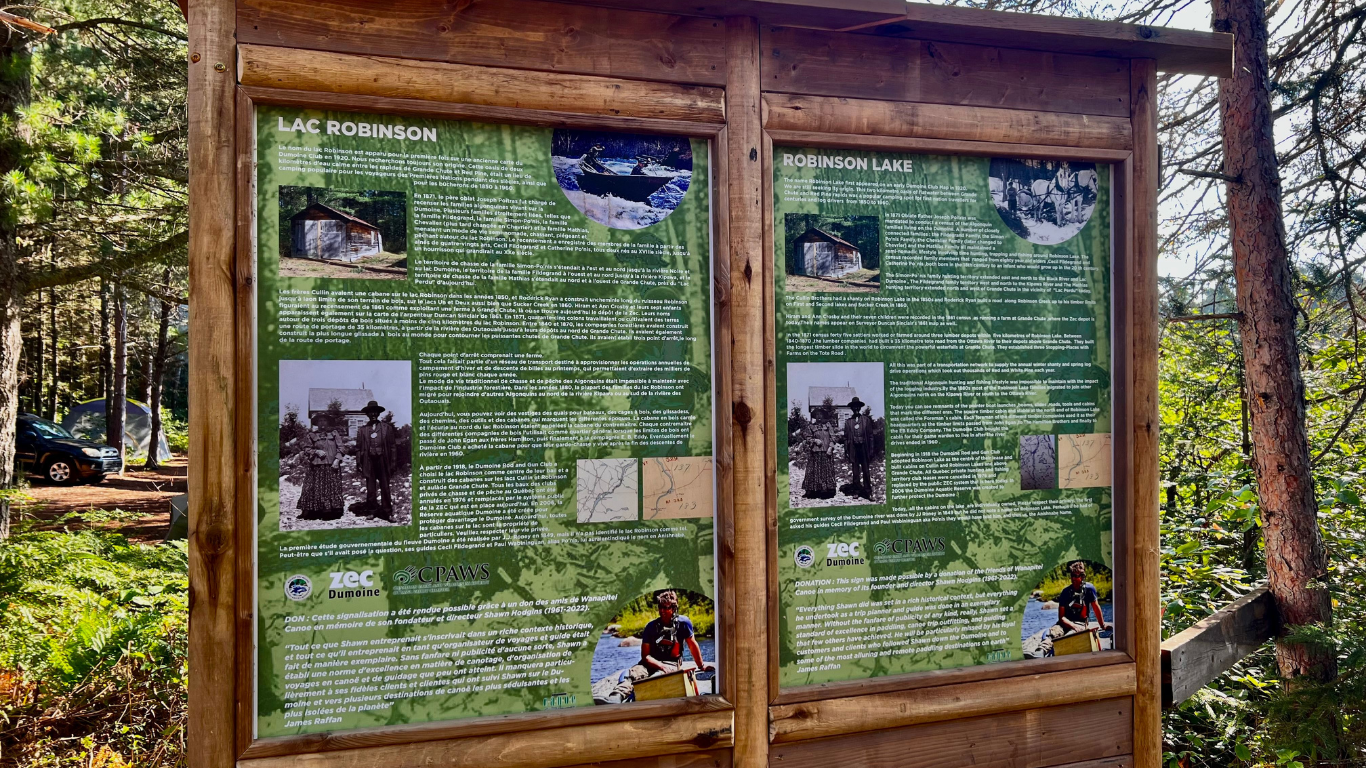
One of 8 Historic info signs on the trail.
Help Move the Brag Load.
Sponsor a Log and Preserve Dumoine History
Join the Tradition. Protect a Legacy.
In the 1800s, Dumoine loggers spent their Sundays building immense “brag loads”, towering piles of logs that tested the strength of both horse and human. The teams that could move their load even a few feet earned bragging rights for the season.
Today, Friends of Dumoine is reviving that proud tradition in a new way!
This cabin, once a shelter for loggers, rangers, and canoeists along the historic Dumoine Tote Road, was rescued from decay last year.
Now we need 50 supporters to help retire the loan that made this rescue possible. We’ve built a symbolic load of 50 logs, and we need your help to move these Dumoine Cabin logs from a bank loan to full ownership.
Each “log” represents $1,000 of support toward the cabin that anchors the southern end of the historic Dumoine Tote Road. A site that connects us to generations of forest rangers, loggers, guides, and conservationists.
Sponsor a Log — Build a Legacy
Once restored, the cabin will serve as a living classroom and interpretive base, where visitors can learn about the history, culture, and conservation of the Dumoine Watershed.
Every donor will be recognized for their contribution to this historic effort:
Silver Birch Member – $1,000
Golden Tamarack Member – $5,000
All supporters will:
– Appear on the Sponsors Page at friendsofdumoine.ca
– Be honored on a Builders’ Plaque inside the restored cabin
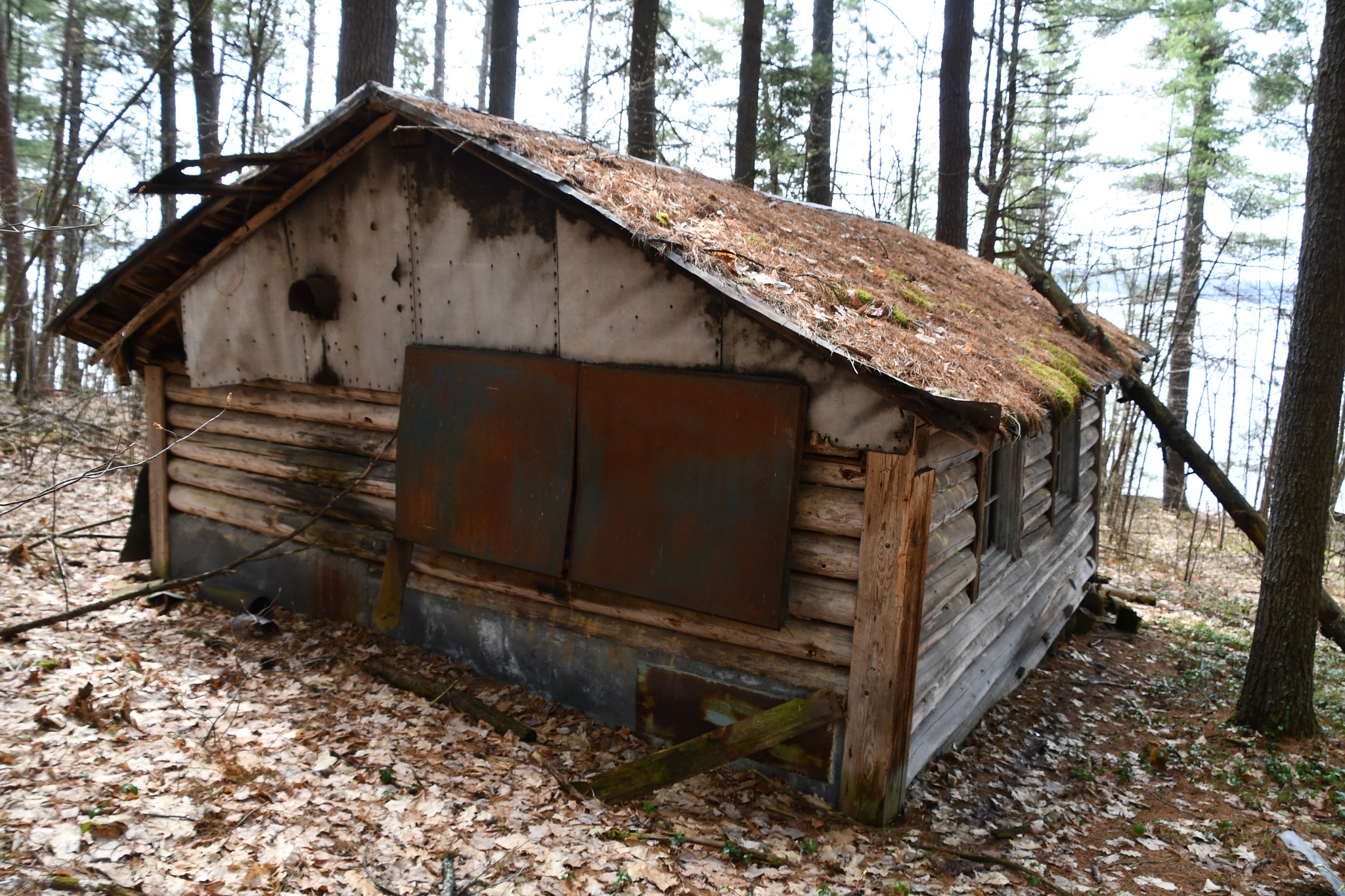
Dumoine cabin from the back, 2011.