OUR
History

The Dumoine watershed is located in western Quebec on the ancestral, traditional and unceded territory of the Algonquin Anishinabeg Nation. It has long been under the stewardship of the families who belong to the Wolf Lake First Nation.
Between 1969 and 2005, a Beaver float plane, with the registration CF-ODA and based at Rapides-des-Joachims, flew most users into the Dumoine watershed. This service was discontinued, in part, because new logging roads made the upper Dumoine more accessible.
Over the next decade,
A group of veteran canoeists decided they wanted to try and do something about it. The group approached all of the guiding companies, camps, and clubs that travelled the Dumoine: together, everyone agreed to make an effort to raise the standard of the trails and campsites.
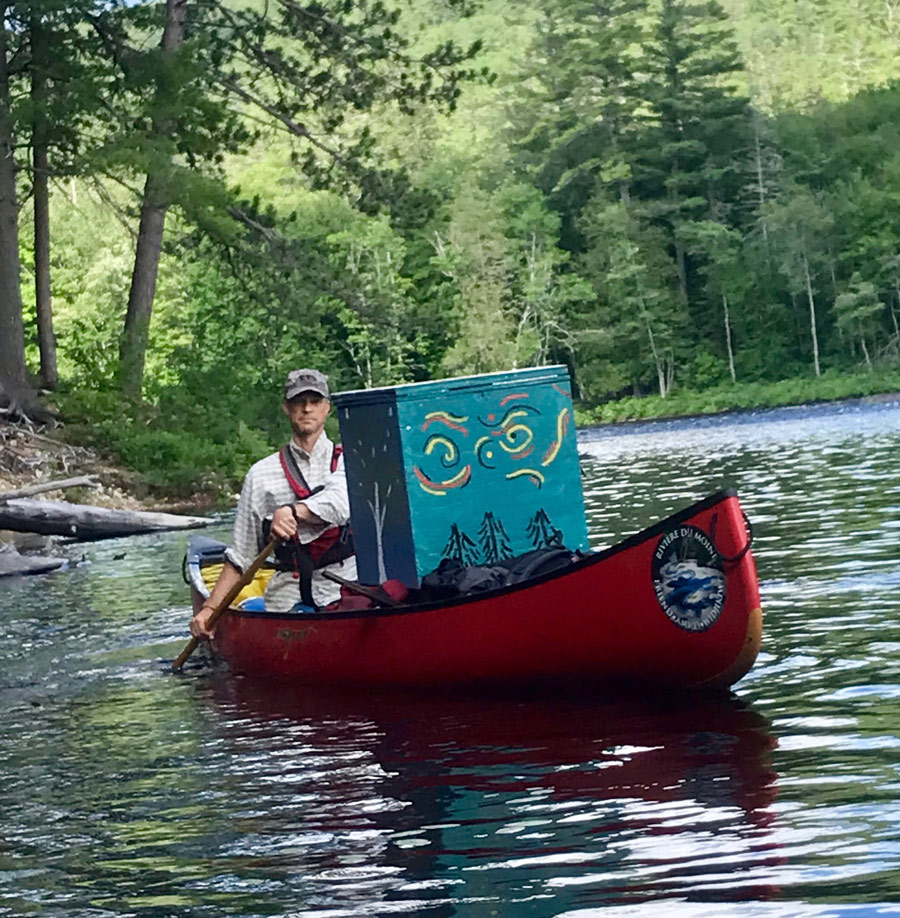
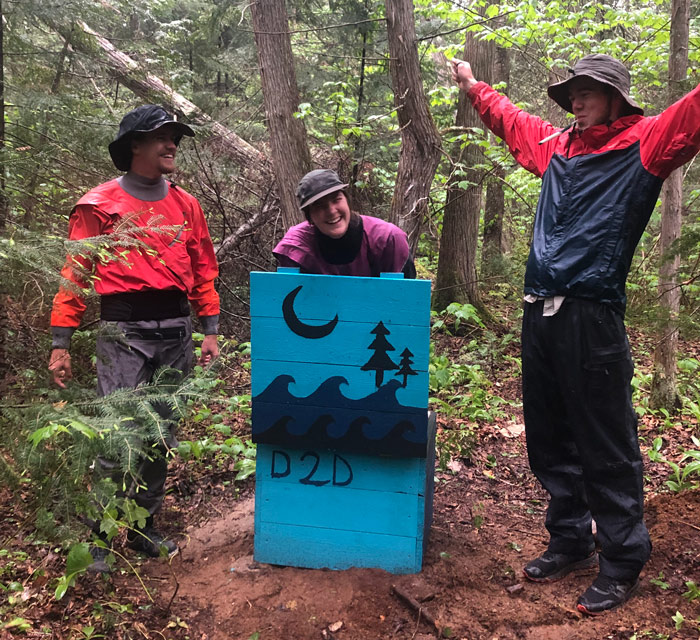
Funds were collected to build twenty-four Algonquin Park-style toilets known as “Thunder Boxes”. These first boxes, as well as three outhouses, were built by Leonard Leclerc, a veteran shuttle driver and long-time resident of Swisha. He applied a coat of “Pointer Boat Red” to the thunder boxes, and then took them to the local community centre, where he asked the kids to “paint something happy on them”. Thus the tradition of the brightly painted Dumoine thunder boxes was born.
Guides picked up a thunder box or two each time they left on a canoe trip. By the end of the summer of 2017, they had installed all 24 boxes on the busiest campsites of the upper Dumoine. At the same time, they cleaned up the campsites, which helped to establish a much higher standard of cleanliness along the river. Over that same summer, canoe shuttle companies delivered and installed outhouses at Benoit Bridge, Richard Rapid, and Ryans Chute.
In 2018, the same ad hoc group of Dumoine Friends decided to fix up the Grande Chute canyon trail and canoe portage.
In 1984, the Zone d’exploitation contrôlée Dumoine (Zec Dumoine) established its office at Grande Chute (a Zec is a protected zone for hunting and fishing). In addition to their own Zec duties, the employees built boardwalks over the swampy areas along the Grande Chute canyon and portage trails. They also attempted to clear the 26 kilometer “Sentier Dumoine” to the Ottawa River. But when the Zec Dumoine moved its office to the village of Rapides- des-Joachims in 2015, the boardwalk and trail projects were abandoned.
In 2018, pleased with the improvements on the upper river, a number of Dumoine paddlers donated funds, which enabled the Friends of Dumoine to rebuild the Grande Chute portage trail and the three associated campsites.
Around the same time, a donation was made by a group wishing to pay tribute to a deceased canoe friend. They provided funds for the material to build a bench at Bellevue campsite. The Dumoine bench tradition was born.
In 2020, the Friends of Dumoine River/Amis de la rivière Dumoine (FOD/ARD) was incorporated as a not-for-profit organization, and the Canadian Parks and Wilderness Society (CPAWS) Ottawa Valley chapter became a partner in the trail project.
That same year, in collaboration with Zec Dumoine, Friends of Dumoine created a plan to reopen the old 1840 logging road that linked the Ottawa River to Robinson Lake. We decided to incorporate the Anishinaabe portages around Grande Chute and Red Pine Rapids into the trail.
We engaged with Wolf Lake First Nation, they gave their approval for the trail. Members of the Wolf Lake First Nation were pleased to provide input about traditional Anishinaabe names for sites along the river; these are featured on our trail and include campsite names.
In 2024, Friends of Dumoine opened the Dumoine tote road hiking trail, consisting of 26 km of groomed trail: 24 campsites with original names; 300 red horseshoe trail markers; 26 thunder boxes; 5 historic site signs; 6 bridges; 1 canoe ferry across the Fildegrand River; 1 reconditioned shelter at Camp Bertrand’s, 1 reclaimed 1920 log cabin shelter at the Ottawa River, and 1 completely renovated volunteers’ cabin at Grande Chute. We are proud to have added this beautiful ‘Hike-through History’ trail to the network of trails in Canada. (Dumoine Tote Road Trail Map)
We welcome new volunteers to help protect the future of the Dumoine’s river and watershed, while at the same time, celebrating the past, by keeping self-propelled recreational activities such as canoeing, kayaking, skiing, snowshoeing, hiking, bike-packing, and camping alive and well, and government supported. Volunteers from Ontario and Quebec, and from as far as away B.C., USA and New Zealand, have donated time and money.