
PLAN YOUR
Adventure

As a self-propelled visitor to the Dumoine, you may be sharing your river or hiking experience with other types of users. These could include fishers and anglers, boaters, cabin owners, and hunters (bear in the spring, grouse and moose in the fall). There are private cabins and hunting/fishing lodges in the watershed. Please respect the private property and space of these other users.
In case of Emergency :
The Dumoine Self-Propelled Watercraft Trip
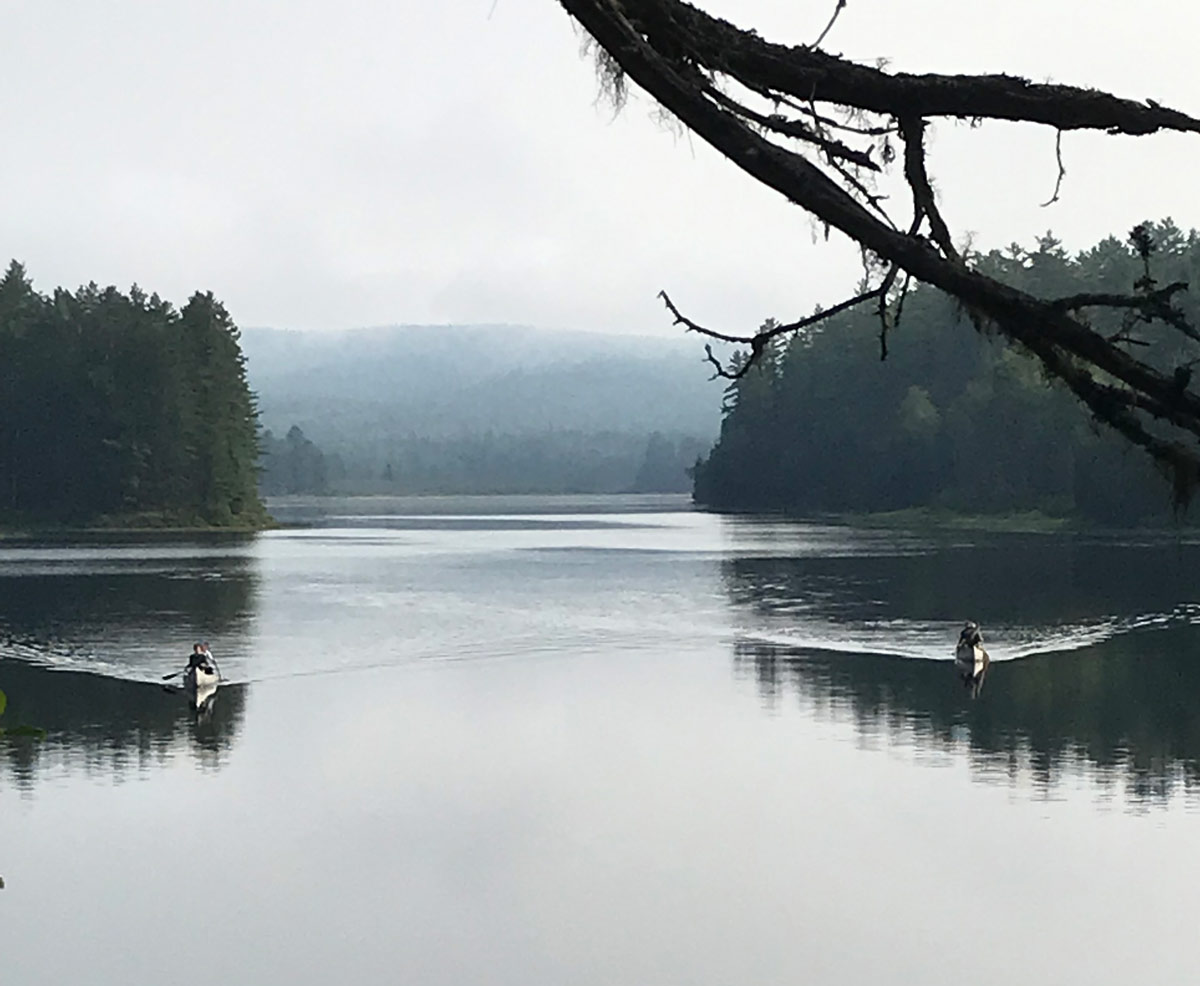
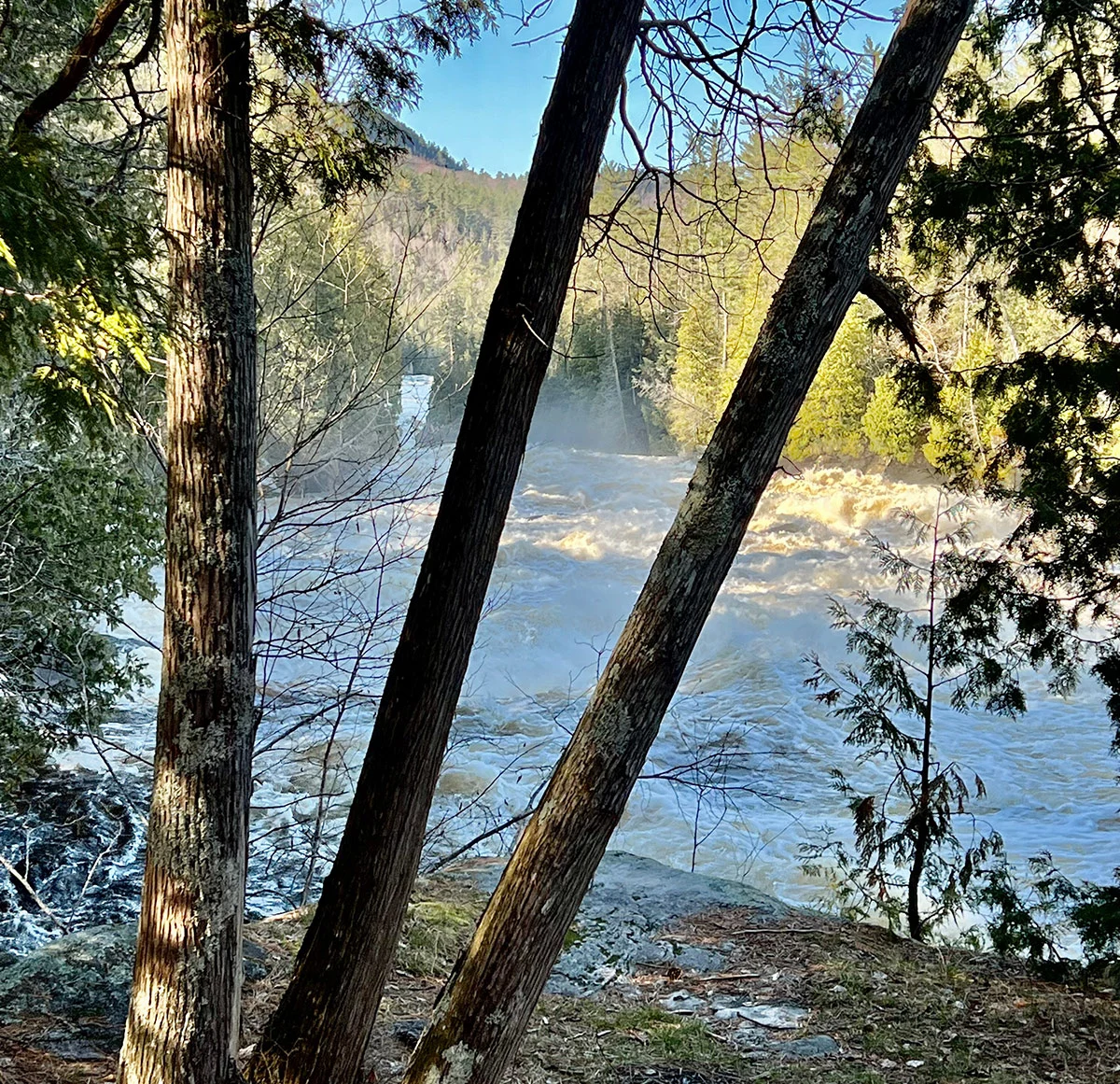
The watercraft trip involves travelling by canoe, kayak, paddle board or pack-raft down a world-class, level-three whitewater river from Lac Dumoine to the Ottawa River.
Every year, the Dumoine welcomes some 1,000 canoeists, who come from all over the world to paddle the river. Depending on the starting point, trips can last 3-21 days. Around half of these paddlers travel in guided groups, with an organized camp, club or outfitter, while the others are private parties, who travel down the river on their own.
Starting options include:
- From the south: the most common starting point is from the villages of Rapides-des-Joachims (Zec Dumoine).
- From the north: through the La Vérendrye Wildlife Reserve
- From the west: either through Temagami Provincial Park (where many youth camps are based), or through Témiscamingue Regional County Municipality, via the Kipawa River
- From the east: via l’Orignal River, near the source of the Coulonge and Noire rivers.
Friends of Dumoine maintains the campsites and portages along these routes by coordinating with canoe trippers who volunteer to clean campsites, install outdoor toilets (thunder boxes) and provide information about river conditions. Friends of Dumoine does not charge travellers for these services.
Zec Dumoine, and Zec Rapides-des-Joachims collect a fee for road use and all activities within their respective territories. Zecs (responsible for protected zones for hunting and fishing), guiding companies, and shuttle drivers are the commercial beneficiaries of all canoe and hiking traffic, as are food, beverage, accommodation, gas and other commercial operations in Rapides-des-Joachims, Laurentian Hills and Pontiac Regionl County Municipality. Please support their businesses wherever possible.
Quebec’s Ministère de l’Environnement, de la Lutte contre les changements climatiques, de la Faune et des Parcs, maintains a solar-powered water-measuring station at the head of Red Pine Rapids, at km 6 on the hiking trail. Regular read-outs on river levels are available at this website (hydrology station at the outflow of Robinson): https://www.cehq.gouv.qc.ca/suivihydro/graphique.asp?NoStation=041902
The Northern Reservoirs, Ottawa River Tourism, Wildlife, FloodWatch
Facebook page is an excellent source for water level and general information.
The Dumoine Hiking Trip
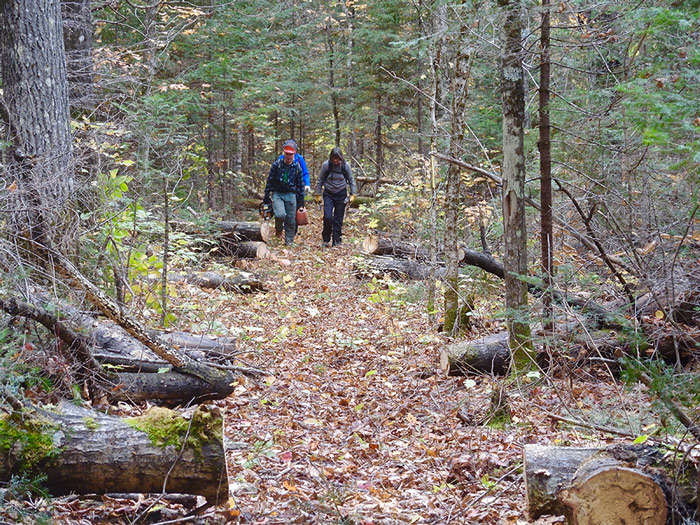
In addition to the well-known white water paddling experience, there is now a 26 kilometre hiking trail that will appeal to backpackers and day hikers alike.
For information regarding starting points, routes, day and multi-day planning, maps, distance/difficulty charts and trail recommendations click bellow:
Sentier Dumoine Trail Classification – R0 2026, Feb. 17
Trail sections are classified based on their degree of difficulty and risk.
| Trail Section | Distance | Difficulty | Trail Type | Notes | Emergency Shelters |
| Main Trail, km0 to km2.4 | 2.4 km | Easy to moderate | Portage trail and meandering wilderness trail | Stepping around boulders, wooden boardwalks slippery when wet | The screened-in porch of the Grande Chute Welcome Centre serves as an emergency shelter |
| Main Trail, km2.4 to km5.2 | 2.8 km | Easy | Gravel forest access road | Vehicular traffic (occasionally), dust, sun exposure | |
| Main Trail, km5.2 to 8.5 | Easy | Meandering wilderness trail | |||
| Shortcut Trail, km3.8 to km7.0 | 700 m | Easy | Grassy forest access trail | Wet ground; muddy in spots | |
| Main Trail, km8.5 to km11.4 | 2.9 km | Moderate | Meandering wilderness trail | Frequent steep sections, stepping around boulders, can be slippery when wet | Lean-to shelter at km10.9 |
| Main Trail, km11.4 to km14.9 | 3.5 km | Moderate to difficult | Meandering wilderness trail | Frequent steep sections, stepping around boulders, can be slippery when wet | Lean-to shelter at km14.4 |
| Main Trail, km14.9 to km17.2 | 2.3 km | Moderate to difficult | Meandering wilderness trail | Frequent steep sections, stepping around boulders, can be slippery when wet | |
| Main Trail, km17.2 to km19.6 | 2.4 km | Easy to moderate | Meandering wilderness trail | Some steep sections. May be slippery when wet | |
| Main Trail, km19.6 to km23.7 | 4.1 km | Easy | Broad forest road | Seasonal access by four-wheeler and snowmobile | |
| Main Trail, km23.7 to km31.5 | 7.8 km | Moderate to difficult | Meandering wilderness trail | Frequent steep sections, stepping around boulders, can be slippery when wet | Lean-to shelter at km27.0 |
| Main Trail, km31.5 to km33.7 | 2.2 km | Moderate | Narrow wagon road | Sometimes overgrown | The old ranger cabin at the mouth of the Dumoine River is an emergency shelter |
| Main Trail, km33.7 to km35.6 | 1.9 km | Easy | Broad wagon road | Sometimes overgrown | |
| Main Trail, km35.6 to km37.8 | 2.2 km | Moderate | Narrow wagon road | Sometimes overgrown | The old ranger cabin at the mouth of the Dumoine River is an emergency shelter |
| Main Trail, km37.8 to km39.3 | 1.5 km | Easy | Broad wagon road | Sometimes overgrown | |
| Main Trail, km39.3 to km42.8 | 3.5 km | Moderate | Narrow wagon road | Sometimes overgrown | The old ranger cabin at the mouth of the Dumoine River is an emergency shelter |
| Main Trail, km42.8 to km44.0 | 1.2 km | Easy | Broad wagon road | Sometimes overgrown | |
| Main Trail, km44.0 to km45.5 | 1.5 km | Easy to moderate | Narrow wagon road | Sometimes overgrown | The old ranger cabin at the mouth of the Dumoine River is an emergency shelter |
“Narrow Wagon Road” refers to the historic 1840s logging supply road (tote road) that was cleared as the focus of Sentier Dumoine. The wagon road is 1.5m wide and laterally level, similar to a railroad bed. Often the wagon road trail sections are very easy to walk along, but there are often tree roots extending across the trail and there are short sections where boulders (from washouts) require more care in hiking. There are also localized areas that are seasonally wet.