Etiquette

A Guide to the Responsible Use of Our Rivers.
We Need Your Help
We acknowledge, understand, and respect that the Dumoines, Noire and Coulonge rivers flow through the ancestral, traditional, and unceded territory of the Algonquin Anishinabeg people. Algonquins have cared for these rivers and their water sheds for thousands of years and continue to do so to this day.
Gone are the days when only a few wilderness travellers paddled the three sister rivers – Dumoine, Noire, and Coulonge – in a season. Now, there are more than 1,000 travellers on the Dumoine River each year and, as a result of the increase in numbers, there is more of an impact on the river and the watershed.
We need your help to keep these rivers in pristine condition, and protect them for your use and the enjoyment of future generations. Here are a few minimum guidelines that we all must follow.
Before You Leave Home
Repack your food and beverages at home in order to reduce weight. Travelling light will help make your trip all the more enjoyable. I
It is also essential to ensure your canoes and boats are free of invasive species. Before you bring them into the watershed, you must wash them thoroughly with soap and water and dry them in the sun for at least a day.
Fires
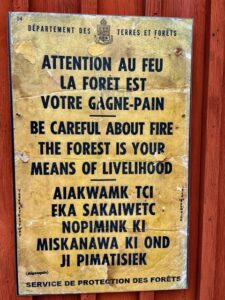 Fire is becoming one of the greatest threats to forested areas throughout Canada
Keep open fires small, using just enough wood for cooking. For firewood, gather sticks and driftwood well away from the campsites and refrain from cutting trees. Never peel birch bark from living birch trees.
Dose your fires thoroughly. Do not under any circumstances, leave a campsite with a fire still smouldering. Use a bailor to get the cold ashes and dispose of them in a thunder box, where provided, to assist in their decomposition.
Smoking
Do not smoke on the trails.
Burn cigarette butts, or, better still, bag them, and take them out with you. A cigarette butt takes up to 10 years to decompose. Never throw cigarette butts into the river as they pollute, can be harmful to wildlife, and contain hazardous microfibers.
Human Waste
Solid Waste
Wet waste does not burn and takes two seasons to decompose.
Wash your plates, cutlery, cups and pots in a bucket or collapsible basin well away from the river. Dispose of the water you have used by spreading it out where it will drain, well out of sight.
Soap, Shampoo, and Sunscreen
Wash with biodegradable soap and shampoo well away from the river where the soapy water can drain into the soil. Never use soap or shampoo in the river. No soap or shampoo is completely biodegradable, although “biodegradable soap” is better than most regular soaps. Please do not swim if you are lathered with sunscreen: most sunscreens contain materials or chemicals that are hazardous to the environment.
Fishing
Refrain from using live minnows. Make sure you have a valid fishing licence and follow the Quebec guidelines regarding catch limits.
Wildlife
Observe wildlife from a distance. Keep your dog on a leash to prevent it from chasing animals. Never feed wildlife.
Hunting
Be aware of hunting seasons and respect other user groups.
 Camping
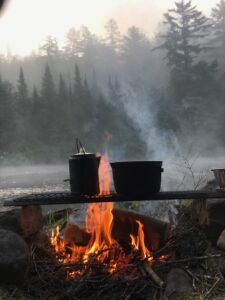
Use established campsites only and leave the construction of new sites to us. Before leaving your campsite, do a final check for tinfoil, cigarette butts, rubber bands, twist-ties, and plastic bread tabs.
Leave What You Find
Preserve the past. You can examine – but please do not touch – any historic or cultural structures, and artifacts that you observe. Please do not remove plants, stones, shells – or other natural objects. Do not build trenches, furniture – or structures.
You Can Help
It really is most important to follow these guidelines. If you see things that may be harmful to the environment or wish to comment on conditions on the rivers, please email us at: dumoinefriends@gmail.com.
To become a member of the Friends of Dumoine and/or to contribute to our conservation efforts, please contact us via home page or send us an email at: dumoinefriends@gmail.com.